The Aunt Who Wasn't Home: Chasing Minnie Through a Century of Bad Handwriting and Family Lore
The Folder That Would Not Close
In early 2020, when the world got very small, I decided to build a family tree. This is a common pandemic story: sourdough starter, a half-learned language app, and a genealogy project that begins with noble intentions and ends with you squinting at a microfilmed census page while wondering if 'Minnie' is a name or a decorative squiggle.
I made it several generations back on my father's side before I hit the wall. The wall had a name: Great-Great-Aunt Minnie. She was a sister to my great-great-grandfather, reportedly born somewhere in Ohio, or possibly Indiana, depending on which aunt you ask and whether that aunt is currently speaking to the other aunt. In our family, Minnie is less a person than a rumor with a birth date.
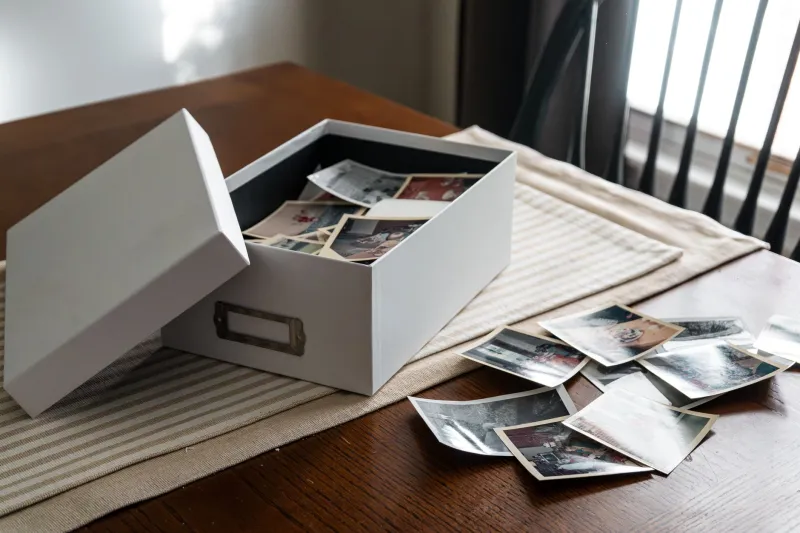
I did what any amateur investigator does. I made a folder. I labeled it. I bought a second pack of highlighters. Then I abandoned the whole thing at the first dead end and did not open the folder again for years. This is the SMQH Files way: half-solved mysteries, half-finished hobbies, and a strong commitment to starting new projects before finishing old ones.
The Legend Inventory
Every family has a Minnie, and every Minnie has three origin stories. Ours went like this:
- Minnie ran off with a traveling salesman and was never spoken of again.
- Minnie moved to Chicago, changed her name, and sent exactly one postcard.
- Minnie never existed at all, and the whole thing was a mix-up involving a cousin named Minerva.
Oral history is a wonderful thing. It is also not an index. It is not a citation. It is not something you can upload to a genealogy website and have quietly matched against a federal record. I wrote all three legends on index cards anyway, because that felt productive, and because a shoebox of index cards is the closest thing my family has to an archive.
The official story, as much as there is one, is that Minnie appears in no census record I can find. That is the claim I set out to test. It is also the claim that made me close my laptop and go outside to look at the birdhouse I have been meaning to repaint since 2023.
What the Census Actually Said, Allegedly
I started where everyone starts: the big genealogy databases, the free weekend searches, the National Archives catalog, and the county clerk's office that answers email roughly once per season. I searched for Minnie under every spelling I could think of. Minnie. Minerva. Mary. Mannie. Ninnie. A name that might have been 'Wilhelmina' if the enumerator was having a bad day.
I found a Minnie in a neighboring county with the right first name and the wrong everything else. I found a Minerva who was too old, a Mary who was too young, and a household that contained a 'Ninnie' who turned out to be a dog. I learned that old handwriting is not a code; it is a mood. The letter 'M' can look like 'N,' 'W,' or a small fence. The letter 'a' can look like 'o,' 'e,' or regret.
I also learned that the 1890 federal census is mostly gone, destroyed by fire and water damage long before I was born. That is a genuine historical dead end, not just a personal failure, and I have been dining out on it ever since. 'Sorry, the census was destroyed,' I say, as if I were there with a hose.
The Dead End I Did Not See Coming
Eventually I found a possible lead: a Minerva in a county next door, listed in a household with a surname that was close to ours but not quite ours. I ordered a record. I waited. I opened the envelope with the gravity of a detective in a procedural drama. Then I discovered that the record was for a different family entirely, and that I had paid a small fee for the privilege of learning absolutely nothing.
A county clerk later told me the birth records for that period were 'spotty,' which is clerk-speak for 'good luck, pal.' I could have kept going. I could have written to a historical society. I could have learned about deed records, church registers, and the fine art of reading a plat map. Instead, I closed the folder, put it at the bottom of a stack, and started a new project about cast-iron skillets. That project is also unfinished.
Why Minnie Stays in the Drawer
I reopened the Minnie folder in 2026. I made fresh notes. I drew a little timeline. I found the same wall in the same place, which is either consistency or a sign that I should take up a hobby with clearer instructions.
Here is what I have: a few family stories, a handful of contradictory names, a destroyed census, a spotty county record, and a strong suspicion that Minnie is not missing so much as misfiled. Here is what I do not have: a conclusion. That is fine. The SMQH Files is not a place for triumphant endings. It is a place for the folder you reopen every few years, add one new note to, and then set down again.
If you have a Minnie in your family, check the 1890 census. It will not be there. But you will feel like an investigator for an afternoon, and that is almost the same thing.