Field Report: Inside the Kitchen's Most Contaminated Evidence Site
Every investigation has a scene. Ours was 18 inches wide, 3 inches deep, and hadn't been fully opened since roughly 2019.
This is the junk drawer. And after two weeks of documentation, cataloging, and one minor staple-gun injury, I'm ready to present findings. What follows is not a resolution. It's a warning.
The Scene
Location: kitchen, second drawer down, left of the stove. Occupant of the house claims to have "organized it recently." The evidence suggests otherwise. The evidence suggests the last organization effort consisted of pushing things around and closing the drawer before they could escape.
Methodology was simple: remove everything, photograph it, sort into categories, and attempt to trace the origin of each item like a particularly depressing episode of a forensics procedural.
Exhibit A: The Battery Graveyard
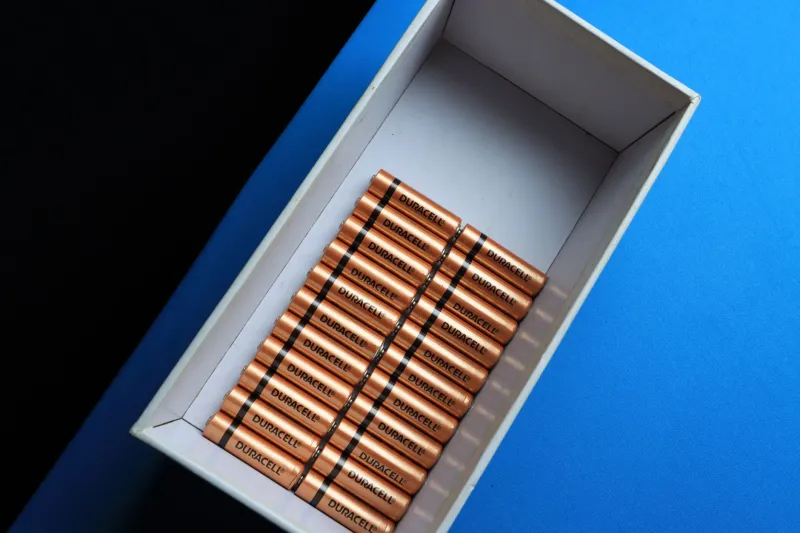
Nine AA batteries. Four AAA. One 9-volt of unknown vintage, its terminals slightly corroded, possibly older than the house's internet router.
Here's what makes this an actual mystery and not just clutter: nobody in this household remembers buying batteries. Not one. The batteries simply appear, depleted, in the drawer. It's a one-way valve. Batteries enter the drawer alive from a remote somewhere, die there, and are never replaced. Nobody buys batteries. The batteries exist anyway. Draw your own conclusions.
The working theory: a battery does not truly die until it has spent at least six weeks in the junk drawer, rattling around next to a twist tie and a fortune cookie slip from 2021. Only then is it permitted to be officially "dead," at which point it becomes permanent drawer infrastructure.
Exhibit B: The Keys to Nowhere
Three keys on no known keychain, opening no known lock.
One appears to be a padlock key. One might be for a car this household hasn't owned since the Obama administration. The third is small, brass, and defiantly unidentifiable. All three have survived multiple drawer purges because — and this is critical — you can't throw away a key. You never know. That's the whole trap. The key survives on pure hypothetical future relevance, the same way a gym membership survives on good intentions.
Exhibit C: The Condiment Colony
Six packets. Three ketchup, two soy sauce, one honey from a fried chicken place two states away that, per Google Maps, closed in 2022. The honey is now the only remaining artifact of that restaurant's existence. The junk drawer has become an archive. It doesn't want that responsibility.
Also present: one soy sauce packet with a slow leak that has bonded to a tape measure. They are one object now. Separation is no longer advised.
Exhibit D: The Tools That Live Here
A single flathead screwdriver. One allen wrench from furniture assembled long ago, kept "in case." A tape measure (the bonded one). A small level, still accurate, still never used. And a utility knife with no blade, which raises philosophical questions about what it is now.
The Pattern
Cross-referencing with other households — informal surveys conducted at two barbecues and one hardware store checkout line — confirms this isn't unique. Every American home has a drawer like this. The contents vary slightly. The structure is identical:
- Dead batteries, never replenished
- Orphan keys, never discarded
- Takeout condiments, never used
- One tool, never returned to the toolbox
- At least one item that defies explanation entirely (ours: a single chopstick)
The drawer doesn't get messy. The drawer accretes. It grows. And no one, in any surveyed household, could name the last time they actively removed something permanently.
Preliminary Conclusion (Not a Conclusion)
The junk drawer is not a storage failure. It's a system — one that runs on deferred decisions. Everything in it is a decision postponed until a future date that never arrives. The batteries, the keys, the honey: all waiting for a moment of relevance that the universe has no plans to provide.
Which raises the obvious follow-up: if the junk drawer is where decisions go to hibernate, where does the rest of it go? Because during this investigation, a second anomaly was flagged. The hall closet. The one with the coats, the boxes of cables, and something heavy on the top shelf that nobody will claim.
That case is now open.
Case File #003: The Top-Shelf Problem — What's Up There, and Who Put It?